Aluminium Rheocasting opens up new possibilities in the production of high-performance technical components. This technology works the alloy in an intermediate state between liquid and solid, transforming it into a controlled semi-solid mass before injection into the die. The aim is to act on material quality even before the casting is formed: reducing turbulence during filling, limiting entrapped air and achieving a more uniform microstructure. An approach of particular interest for aluminium high-pressure die casting destined for applications in which reliability, lightness and consistent performance are decisive requirements.
How Rheocasting works
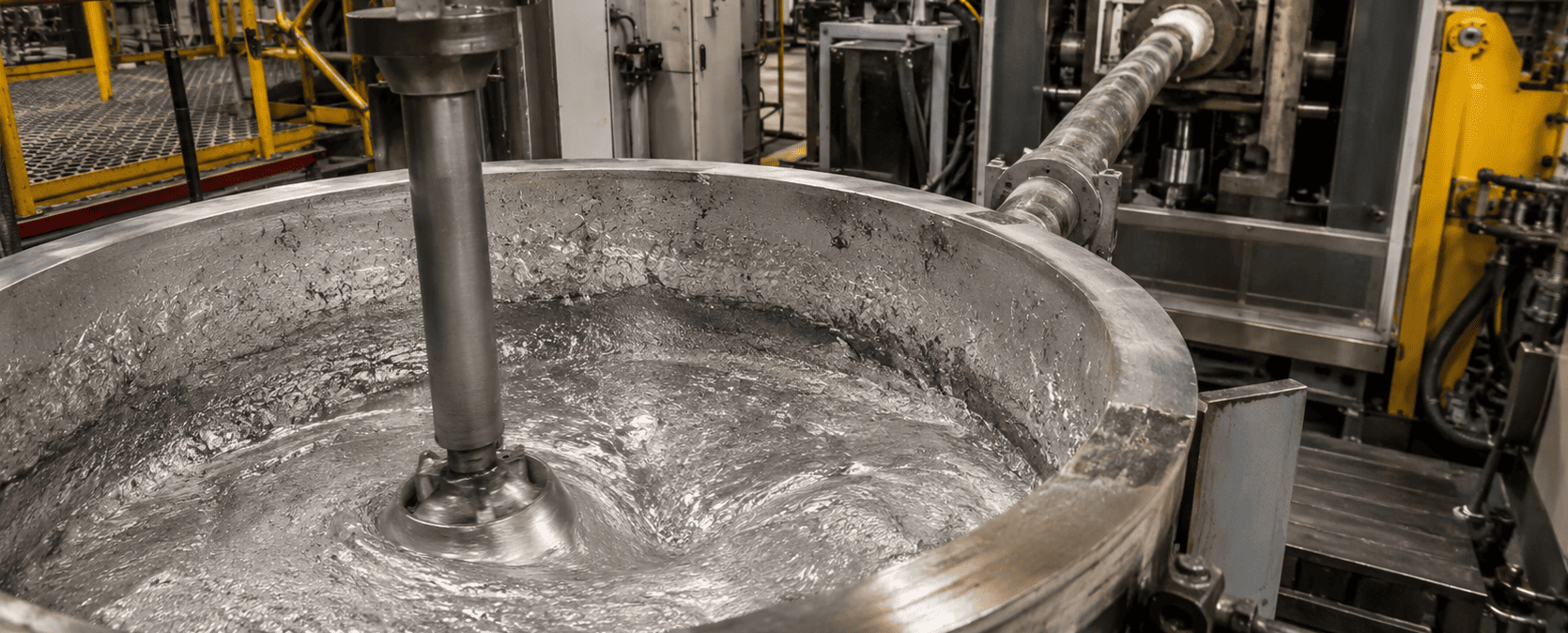
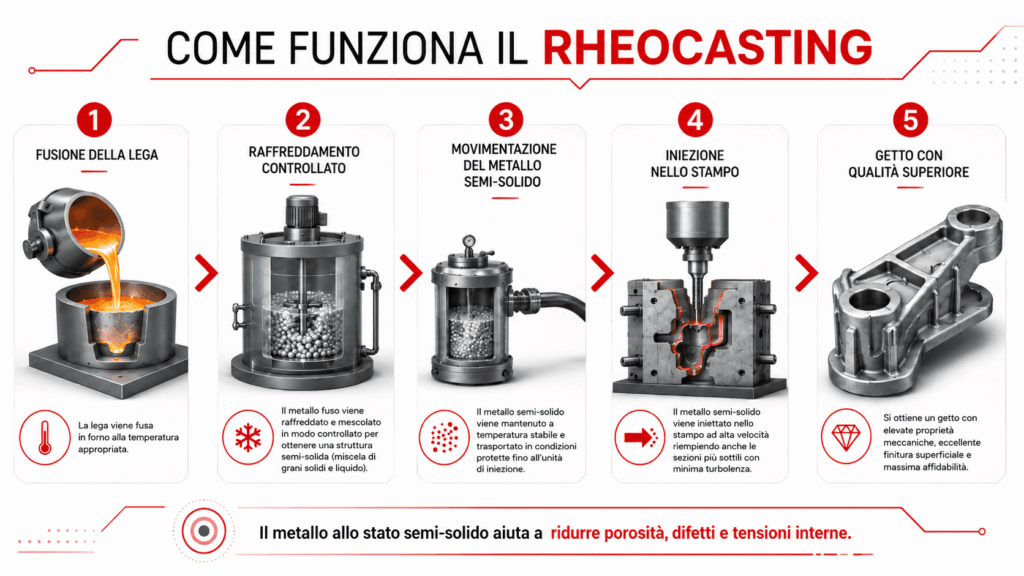
In the Rheocasting process, the aluminium alloy is cooled in a controlled manner until it enters the semi-solid range. During this phase the metal is kept in motion through stirring systems, heat exchange or other slurry preparation techniques. This movement counteracts the formation of the traditional dendritic structures and favours the development of more compact, globular solid particles distributed within the liquid phase. The resulting material exhibits pseudoplastic behaviour: at rest it maintains a high viscosity, while during injection it becomes more fluid. This makes it possible to fill intricate geometries with a more regular, less turbulent flow than the one generated by a fully liquid alloy. Unlike thixocasting, which starts from a previously prepared and subsequently reheated semi-finished product, Rheocasting generates the semi-solid metal directly from the alloy in its liquid state, making the process potentially more integrable into an HPDC production plant.
Why Rheocasting improves casting quality
In conventional die casting, the high velocity of the liquid metal can promote turbulence, gas entrapment and oxide formation. Subsequent cooling may also generate shrinkage, porosity and internal inhomogeneities. In Rheocasting, part of the alloy is already solidified before entering the die. The lower thermal content and higher viscosity of the slurry can reduce entrapped air and the volumetric shrinkage occurring inside the cavity. The expected result is a more compact and uniform casting, with fewer internal defects and greater consistency of mechanical properties. The reduction in porosity can also make heat treatments, welding and downstream machining operations more accessible — operations that prove critical on conventional die-cast components with a high gas content. Residual stresses too can be positively influenced by the lower amount of heat introduced into the die and by a more controlled solidification. The outcome, however, depends on component geometry, alloy, die and parameters used: for this reason, every application must be validated through specific trials and inspections.
The benefits of aluminium Rheocasting
The correct application of the process can generate advantages along the entire development and production cycle.
Lower porosity and greater reliability
A less turbulent filling limits air entrapment and contributes to the production of denser, more homogeneous aluminium components.
More consistent mechanical properties
The globular microstructure can improve ductility, fatigue resistance and repeatability of performance, especially in components subjected to dynamic loads.
Greater design freedom
The behaviour of the slurry makes it possible to work on complex geometries, thin walls and section variations, creating new opportunities for lightweighting and for consolidating multiple functions into a single component.
Lower thermal load on the process
The alloy enters the die at a lower temperature and partially solidified. This can reduce thermal shocks, cooling requirements and wear on die-casting dies.
More sustainable production
The potential reduction in scrap, rework, corrective treatments and release agent consumption can help to decrease the use of materials and energy along the production process.
A technology that requires control and expertise
The advantages of Rheocasting are not automatic. Final quality depends on the control of numerous variables: aluminium alloy composition, temperature, solid phase fraction, stirring speed, transfer time, injection profile, pressure, vacuum and die thermal regulation. An uncontrolled variation can alter slurry viscosity, hinder filling or generate segregation and inhomogeneities. For this reason, Rheocasting must be developed through coordinated co-design and co-engineering work. Component design, filling simulation, die tooling, machine parameters and quality control must be regarded as parts of a single system.
Friulpress research on Rheocasting
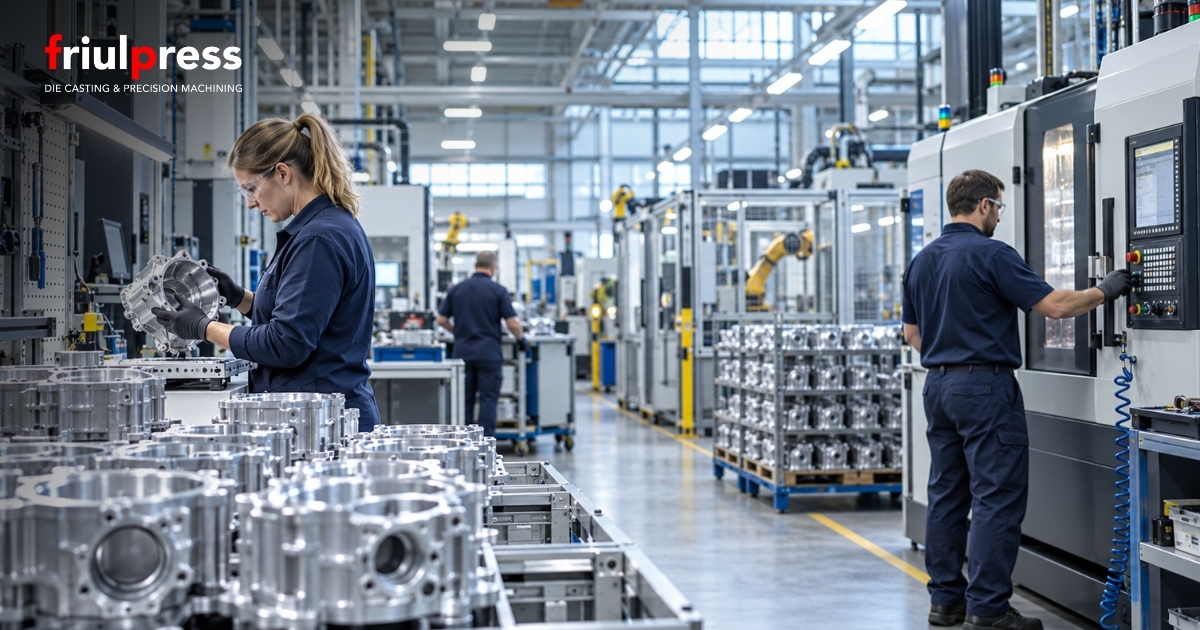
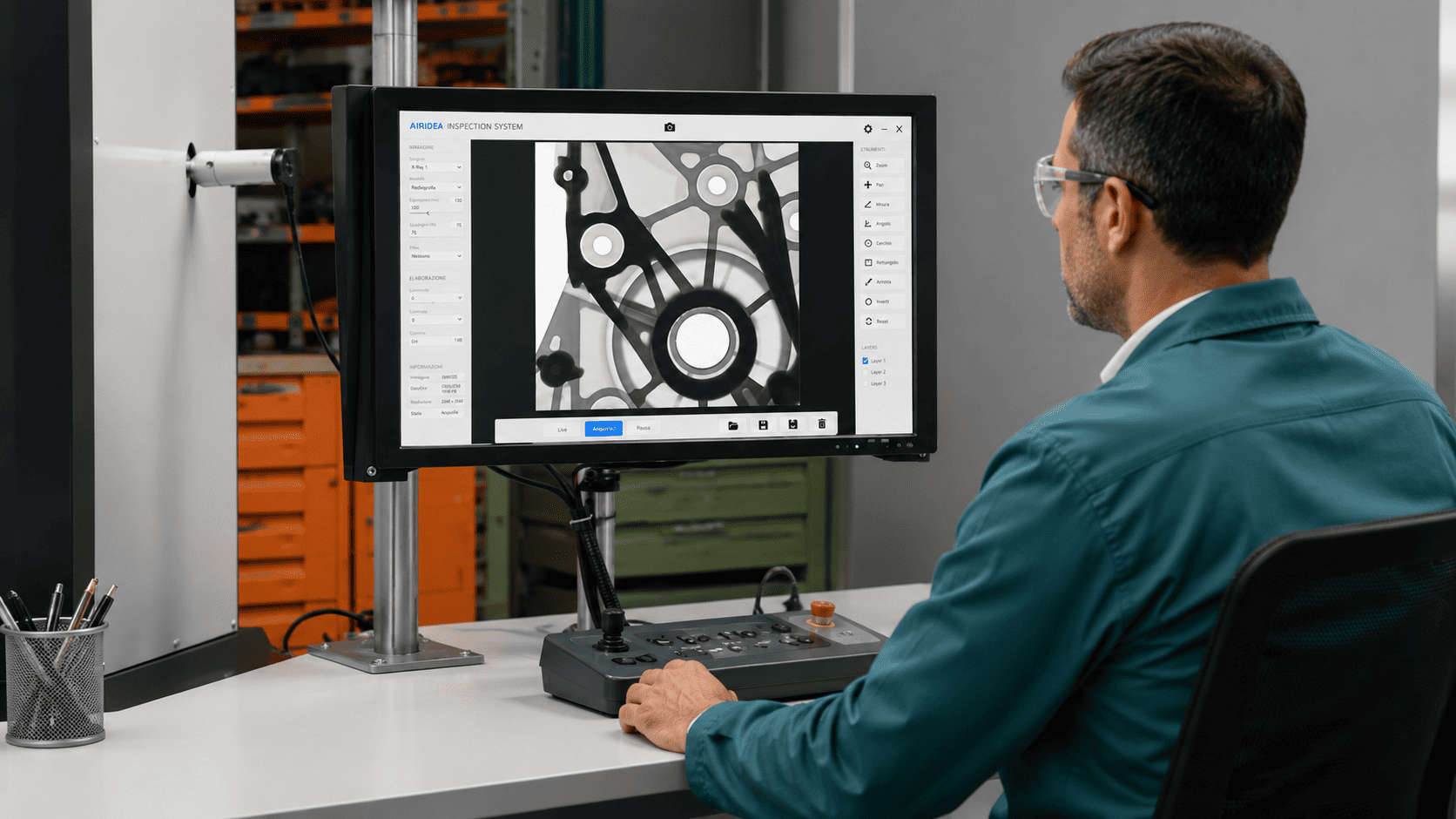
Friulpress operates in aluminium die casting and precision machining through an integrated supply chain that accompanies the component from design to the finished part. The skills developed in HPDC technology, die design, CNC machining and radiographic and tomographic inspections form the foundation on which we are exploring the potential of semi-solid metal.
Rheocasting is an innovative technology that uses metal in the semi-solid state to improve casting quality and reduce defects, porosity and internal stresses. For this reason we invest in the research and development of this solution, with the aim of producing components that are increasingly high-performing, reliable and sustainable.
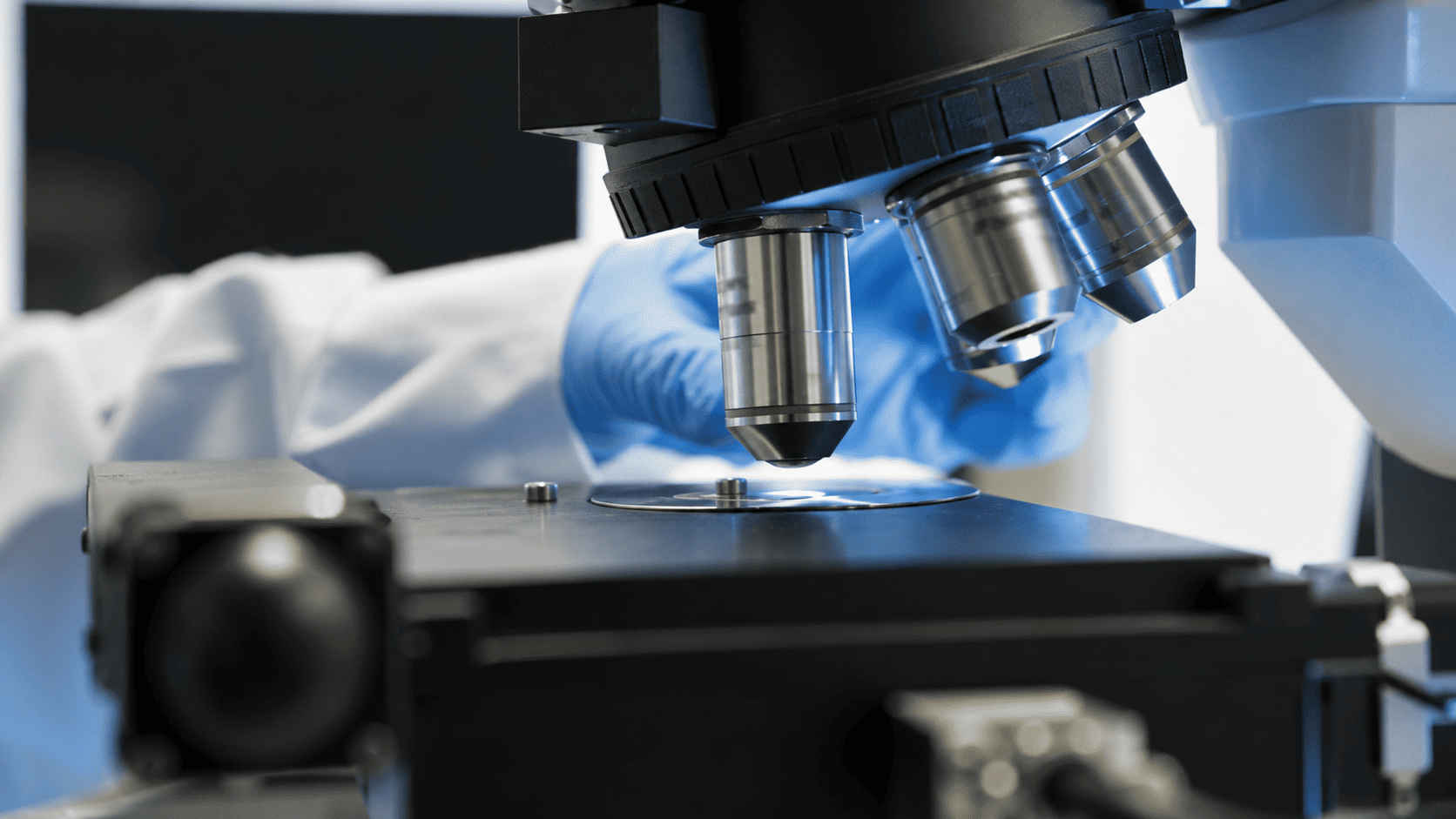
Our path is geared toward the industrial validation of the technology: alloy selection, definition of process windows, simulation, die design, microstructural analysis and performance validation. We look at automotive, e-mobility and industrial applications in which weight reduction, sealing, fatigue resistance and dimensional stability can deliver a tangible advantage. For Friulpress, innovation does not mean adding a single technology to the machinery park. It means integrating new knowledge into the production chain and turning it into mechanical components designed to respond to the next demands of industry.